
Defence Exam Preparation Strategy: Comprehensive Guide with NDA, CDS & AFCAT Preparation Tips
Every year, thousands of young Indians dream of wearing the uniform of the Indian Army, Navy, or Air Force. A well-planned defence exam preparation strategy turns this dream into reality. Whether you are preparing for the NDA Exam Preparation Strategy, CDS Exam Preparation Strategy, or AFCAT Preparation Strategy, success demands discipline, consistency, and the right approach.
This guide provides practical, research-based defence exam preparation tips drawn from official UPSC notifications, Indian Air Force guidelines, and proven methods used by successful candidates. It covers everything from understanding the exams to building a realistic defence exam study plan, avoiding common pitfalls, and knowing when structured coaching helps. If you are searching for defence exam preparation tips for beginners, how to prepare for defence exams in India, or NDA exam preparation after 10th and after 12th, you are in the right place.

Understanding Defence Exams in India
The Indian Armed Forces recruit officers through transparent, merit-based examinations conducted by the Union Public Service Commission (UPSC) and the Indian Air Force. Three major exams dominate the landscape:
National Defence Academy (NDA) Exam Conducted by UPSC twice a year (NDA I and NDA II). It is the gateway for candidates who have passed or are appearing for Class 12. Successful candidates join the NDA in Khadakwasla for joint training before commissioning into the Army, Navy, or Air Force. Exam structure (as per latest UPSC notifications):
- Mathematics paper: 2½ hours, 300 marks (Class 11-12 level)
- General Ability Test (GAT): 2½ hours, 600 marks (English 200 marks + GK 400 marks)
- Total written marks: 900
- Services Selection Board (SSB) Interview: 900 marks
Combined Defence Services (CDS) Exam Also conducted by UPSC twice a year. It is meant for graduates (or final-year students). It recruits for the Indian Military Academy (IMA), Indian Naval Academy (INA), Air Force Academy (AFA), and Officers Training Academy (OTA). Exam structure:
- For IMA, INA, and AFA: English (100 marks), General Knowledge (100 marks), Elementary Mathematics (100 marks) — each 2 hours
- For OTA: Only English and General Knowledge (200 marks total)
- SSB Interview carries equal marks to the written exam
Air Force Common Admission Test (AFCAT) Conducted by the Indian Air Force twice a year through CDAC. It is the primary entry for Flying Branch and Ground Duty (Technical & Non-Technical) branches. Exam structure:
- 100 objective questions, 300 marks, 2 hours
- Sections: English, General Awareness, Numerical Ability, Reasoning & Military Aptitude Test
- Followed by Air Force Selection Board (AFSB) testing (similar to SSB)
All three exams are followed by rigorous medical examination and merit-based final selection. The written tests are objective with negative marking, making accuracy and time management critical. Official notifications on upsc.gov.in and afcat.cdac.in provide the latest syllabus and eligibility every cycle.

Step-by-Step Defence Exam Preparation Strategy
A successful defence exam preparation strategy follows eight proven pillars used by candidates who cleared these exams on merit.
1. Understanding the Syllabus Thoroughly Begin by downloading the latest official notification. For NDA, focus on 11th-12th Mathematics and GAT topics. CDS Mathematics is Class 10 level, while English and GK are graduate standard. AFCAT tests basic English, current events (including defence-specific), simple numericals, and logical reasoning with military aptitude. Create a topic-wise checklist and tick off coverage every week.
2. Building Strong Fundamentals
- Mathematics: Start with NCERT textbooks (Class 10-12 for NDA, Class 10 for CDS). Master concepts before solving problems.
- English: Read Wren & Martin or similar grammar books and practise comprehension daily. Build vocabulary through newspaper editorials.
- General Knowledge & Science: Lucent’s General Knowledge and NCERT Science books (6-10) form the base. For NDA GAT Physics, Chemistry, and Biology sections, stick to NCERT.
- Current Affairs: This is non-negotiable for all exams. Read The Hindu or Indian Express daily and maintain monthly notes.
3. Creating a Disciplined Study Schedule Consistency beats intensity. Most successful candidates study 6-8 hours daily for written exams while maintaining physical fitness. Divide your day into fixed slots: morning for difficult subjects like Maths, afternoon for GK/Current Affairs, and evening for revision and PYQs. Include weekly off-days for recovery.
4. Practising Previous Year Question Papers (PYQs) UPSC releases previous NDA and CDS question papers on its website. AFCAT previous papers are available on the official IAF portal. Solve at least 10 years’ papers. Analyse mistakes and note recurring topics. This is one of the most effective NDA exam preparation tips and CDS exam preparation tips.
5. Taking Mock Tests and Mastering Time Management Join a test series or use official sample papers. Attempt full-length mocks under exam conditions. For NDA Mathematics (120 questions in 150 minutes) and GAT (150 questions in 150 minutes), learn to attempt 80-85% questions accurately. Negative marking (1/3rd) makes guesswork costly. Track your speed and accuracy weekly.
6. Physical Fitness Preparation Physical standards are not tested through a separate PFT in the written stage but are mandatory during SSB medical and training. Start early:
- Run 2.4–5 km regularly
- Practise push-ups, pull-ups, sit-ups, and chin-ups
- Play team sports for agility and stamina Follow the exact medical standards published in official notifications (height, weight, vision, dental, etc.). Begin physical training alongside studies — this is crucial for defence exam preparation after 10th or after 12th.
7. Current Affairs Preparation Dedicate 45-60 minutes daily. Cover national/international news, defence indigenisation (Atmanirbhar Bharat), sports, awards, and government schemes. Use monthly compilations only as supplements, never as the sole source.
8. Personality Development for SSB The SSB/AFSB is a 5-day process assessing Officer Like Qualities (OLQs) through psychological tests, group tasks, and personal interview. Start early:
- Develop leadership through group activities
- Practise public speaking and clear communication
- Read biographies of armed forces officers
- Be honest and natural — selectors spot rehearsed responses instantly
Realistic Defence Exam Preparation Strategy
Here is a practical defence exam study plan that thousands of aspirants have adapted successfully. It works for both NDA exam preparation strategy (after 12th) and CDS exam preparation strategy (after graduation). Adjust according to your timeline.
Daily Routine (6-8 months before exam)
- 5:30 AM – 6:30 AM: Physical training (run + exercises)
- 7:00 AM – 10:00 AM: Mathematics/Elementary Maths (2-3 hours focused practice)
- 10:30 AM – 1:00 PM: English + Vocabulary building
- 2:00 PM – 4:00 PM: General Knowledge & Science revision
- 4:30 PM – 6:00 PM: Current Affairs reading + note-making
- 7:00 PM – 9:00 PM: PYQs or Mock test analysis
- 9:30 PM: Light revision or SSB story writing practice
Weekly Targets
- Monday to Saturday: Full syllabus coverage
- Sunday: Full mock test + complete analysis + physical endurance test (5 km run)
Phase-wise Plan
- Months 1-3: Build concepts using NCERT and standard books
- Months 4-5: Intensive PYQ solving and topic-wise tests
- Months 6-8: Full-length mocks every 3 days + SSB preparation workshops
For defence exam preparation tips for beginners or those starting NDA exam preparation after 10th, join a foundation course that focuses on NCERT completion and habit formation. After Class 12, shift to full-time intensive preparation.
Common Mistakes Defence Aspirants Should Avoid in Defence Exam Preparation Strategy
Even talented candidates fail because of these avoidable errors:
- Ignoring physical fitness until the last moment — fitness is part of the overall selection process.
- Not solving PYQs — many questions repeat in pattern.
- Poor time management during the exam — attempting too many questions without accuracy hurts due to negative marking.
- Over-reliance on random online content instead of official syllabus and standard books.
- Neglecting SSB preparation until after clearing the written exam — personality development takes time.
- Studying without revision — weekly and monthly revisions are essential for retention.
Role of Coaching in Defence Exam Preparation
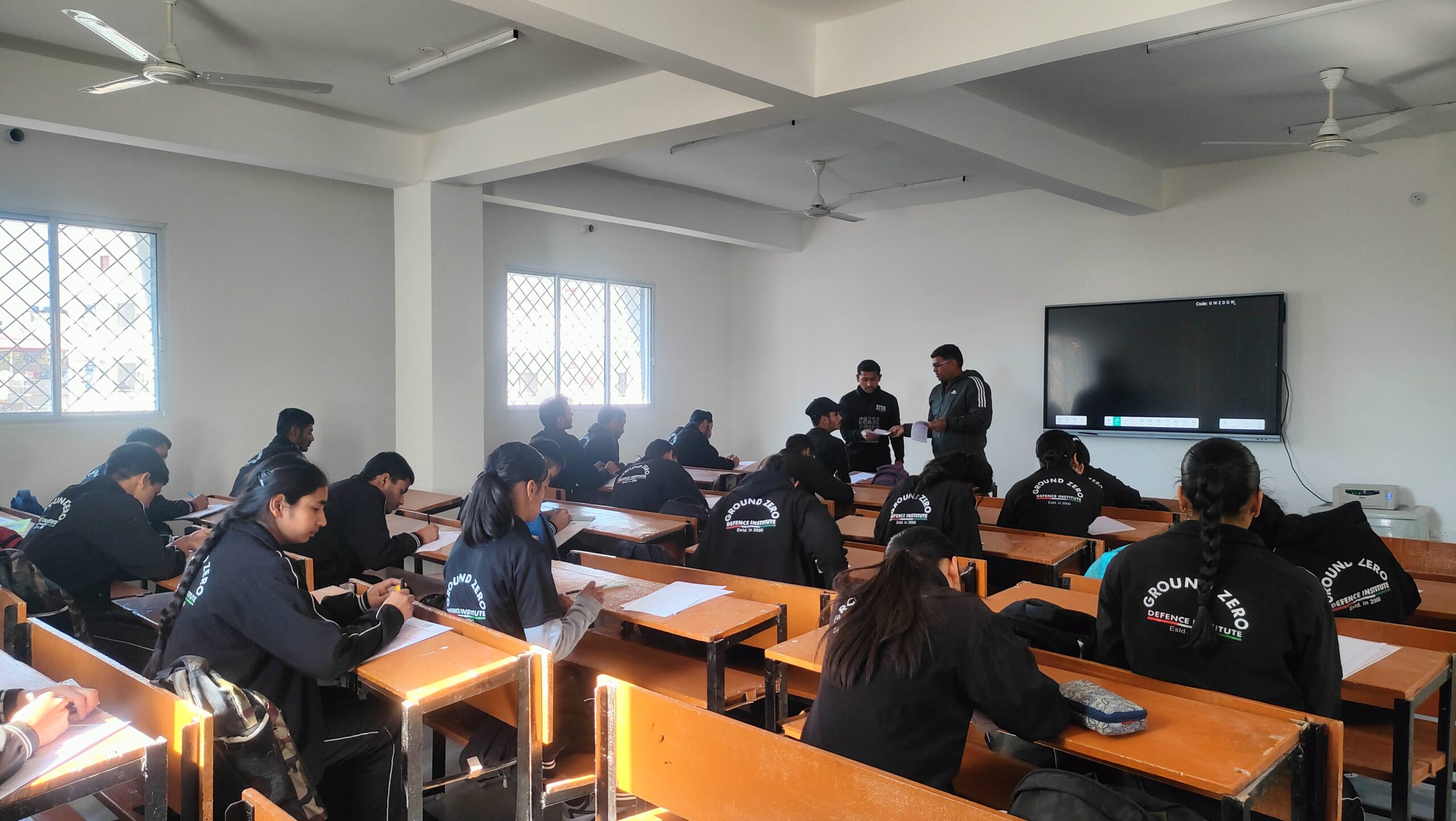
Self-study works for many disciplined aspirants, but structured coaching provides guidance, regular testing, peer competition, and expert SSB training. A good institute saves time by offering curated study material, doubt-clearing sessions, and a disciplined environment.
For aspirants in North India, Dehradun has emerged as a hub for defence training due to its pleasant climate and experienced faculty. Many candidates opt for professional guidance at reputed centres. One such institute is Ground Zero Defence Institute, known as the best defence academy in Dehradun and a trusted name for NDA coaching in Dehradun. The institute focuses on comprehensive written exam preparation, physical training, and SSB personality development under mentors with real armed forces experience. Their structured approach complements self-study and helps aspirants follow a proven defence exam preparation strategy without unnecessary distractions.
Conclusion
Cracking NDA, CDS, or AFCAT is not about luck — it is about following a clear defence exam preparation strategy with discipline and consistency. Start today: download the official notification, make your syllabus checklist, and commit to daily study and physical training. Remember, every officer who stands at the passing-out parade once sat where you are sitting now — unsure but determined.
The Indian Armed Forces need leaders who are physically fit, mentally sharp, and emotionally strong. Build these qualities one day at a time. Stay focused, believe in the process, and the uniform will follow.
Success in defence exams rewards those who prepare with purpose. Begin your journey with the right strategy, and the nation will one day salute you in uniform.
Start implementing this defence exam preparation strategy today. For personalised guidance on NDA exam preparation tips, CDS exam preparation tips, or AFCAT preparation strategy, stay consistent and refer to official sources regularly. Your dream of serving the nation is closer than you think. Jai Hind!