
Indian Army Brigadier: Rank, Duties, Powers & Salary
- The Indian Army Brigadier represents a pivotal senior leadership position, typically achieved after 23-25 years of exemplary service.
- Evidence indicates that Brigadiers command brigades of 3,000-5,000 personnel, bridging tactical execution and strategic oversight.
- Research suggests that promotions to this one-star rank are merit-based, with no direct entry—officers progress from Lieutenant through Colonel via rigorous evaluations.
- Salaries under the 7th Pay Commission start at ₹1,39,600, supplemented by Military Service Pay and allowances, reflecting the role’s demands.
Overview of the Indian Army Brigadier Role
A Brigadier in the Indian Army holds a one-star rank, positioned above Colonel and below Major General in the officer hierarchy. This rank entails commanding brigades or holding key staff positions, ensuring operational readiness in both peacetime and conflict. Aspiring officers often begin their journey through NDA preparation or CDS exams, progressing via merit and training.Key Responsibilities for Indian Army Brigadier
Brigadiers oversee brigade-level operations, including planning, training, and administration. Their duties span personnel management, logistics, and discipline enforcement. In wartime, they lead tactical maneuvers; in peacetime, they focus on unit preparedness.

Compensation and Benefits
Under the 7th Pay Commission, Brigadier salary as per 7th Pay Commission includes a basic pay of ₹1,39,600-₹2,17,600 (Level 13A), plus ₹15,500 Military Service Pay. Allowances like Dearness Allowance (DA), House Rent Allowance (HRA), and field area allowances enhance total earnings, often reaching ₹1,80,000-₹2,20,000 in-hand.
Path to Brigadier
Entry routes include NDA or CDS for permanent commission. Promotion timeline: Lieutenant (entry), Captain (2 years), Major (6 years), Lieutenant Colonel (13 years), Colonel (15-26 years by selection), Brigadier (23-25 years by selection). Success requires continuous assessments and leadership courses.
For those preparing, institutions like Ground Zero Defence Academy (GZDA) offer guidance from experienced mentors. See https://groundzerodefenceacademy.com for NDA preparation resources.
The Brigadier rank in the Indian Army stands as a cornerstone of senior military leadership, embodying decades of disciplined service, strategic acumen, and unwavering commitment to national security. In an era where the Indian Armed Forces face diverse challenges—from border defense to counter-insurgency operations—the Brigadier serves as a vital link between tactical field commands and higher strategic directives. This rank, often attained after 23 to 25 years of commissioned service, highlights the meritocratic nature of Indian Army officer ranks, where promotions are earned through rigorous performance evaluations, specialized training, and demonstrated leadership prowess.
As a one-star general officer, the Brigadier commands respect not only within military circles but also in broader national discourse. It represents a transition from regimental duties to brigade-level responsibilities, where officers must balance operational efficiency with administrative oversight. For aspirants eyeing this prestigious position, understanding its significance is crucial. Institutions like Ground Zero Defence Academy (GZDA) play a key role in preparing candidates through structured NDA preparation and CDS coaching, fostering the discipline and knowledge needed for long-term career progression in the Indian Army.
What is a Indian Army Brigadier
In the structured hierarchy of Indian Army officer ranks, the Brigadier occupies a senior position as a one-star rank. This designation places it directly above the rank of Colonel and below that of Major General, forming part of the commissioned officers’ cadre. Brigadiers are typically responsible for commanding brigades, which are tactical formations comprising multiple battalions and support units.
The one-star rank signifies a shift toward general officer status, where leadership extends beyond individual regiments to larger formations. In NATO equivalents, it aligns with OF-6, emphasizing its seniority. Officers at this level often hold staff roles at corps or army headquarters, contributing to broader operational planning.
This rank is not entry-level; it requires extensive experience and selection-based promotion. For those aspiring to join the Indian Army, pathways like NDA or CDS exams are essential starting points, leading to commissioned service and eventual eligibility for higher ranks like Brigadier.
Indian Army Brigadier Rank Structure
The Brigadier rank in the Indian Army features distinctive insignia that symbolize authority and heritage. The shoulder badge consists of the National Emblem positioned above three five-pointed stars arranged in a triangular formation. Gorget patches are crimson with a single golden star, distinguishing it from lower ranks.
At the posting level, Brigadiers command brigades, typically encompassing 3,000 to 5,000 personnel across infantry, artillery, or armored units. Their command authority extends to operational oversight, including coordination with support elements like engineers and logistics.
In the broader Indian Army officer ranks, this structure ensures a clear chain of command, with Brigadiers often serving as Brigade Commanders or in roles like Brigadier General Staff. Retirement age for this rank is 56 years, reflecting the seniority and experience required.

Duties and Responsibilities of a Indian Army Brigadier
Brigadier duties and powers in the Indian Army encompass a wide array of operational, administrative, and strategic tasks. Operationally, they command brigades, overseeing tactical planning, troop deployment, and execution in combat scenarios.
Administratively, Brigadiers manage personnel, including assignments, welfare, and morale maintenance. They handle logistics, ensuring resource allocation and equipment readiness. Strategically, they contribute to planning at corps level, analyzing intelligence and developing maneuvers.
In peacetime, roles focus on training programs, unit preparedness, and administrative efficiency. During wartime, they lead combined arms operations, coordinating with other services. Brigadiers also serve in staff positions like Deputy Director General at Army Headquarters.
- Operational Command: Leading brigade-level missions.
- Administrative Responsibilities: Overseeing budgets and personnel.
- Strategic Roles: Advising on policy and joint operations.
Powers and Authority of a Brigadier
The powers and authority of a Brigadier in the Indian Army include comprehensive command over their brigade, enabling decisions on deployments and tactics. They hold decision-making authority in operational matters, ensuring alignment with higher directives.
Disciplinary responsibilities are governed by the Army Act, allowing Brigadiers to convene summary courts-martial for minor offenses. They enforce discipline, addressing violations to maintain unit cohesion.
Financial powers extend to brigade budgets, with authority over allocations for training and logistics. Administrative control includes personnel postings and resource management.
- Command Powers: Direct control over 3,000-5,000 troops.
- Decision-Making: Tactical and operational choices.
- Disciplinary: Judicial powers under military law.
Salary of an Indian Army Brigadier
The salary of an Indian Army Brigadier is structured under Pay Level 13A of the 7th Central Pay Commission, ranging from ₹1,39,600 to ₹2,17,600. This basic pay is augmented by Military Service Pay of ₹15,500, applicable to officers up to Brigadier rank.
Allowances include Dearness Allowance (DA, currently around 50% of basic pay), House Rent Allowance (HRA, 8-24% based on city classification), Transport Allowance (₹3,600-₹7,200 + DA), and field area allowance (up to ₹10,500 in modified field areas). High altitude allowance varies from ₹1,060 to ₹5,300 per month.
| Allowance Type | Amount (₹) | Applicability |
|---|---|---|
| Dearness Allowance | Variable (e.g., 50% of basic) | All personnel |
| House Rent Allowance | 8-24% of basic | Based on posting city |
| Military Service Pay | 15,500 | Up to Brigadier |
| Field Area Allowance | Up to 10,500 | Field postings |
| Transport Allowance | 3,600 + DA | Urban areas |
Net in-hand salary often exceeds ₹1,80,000, excluding deductions.
How to Become a Brigadier in the Indian Army
Career progression to Brigadier begins with entry as a commissioned officer via NDA or CDS routes. NDA involves a three-year training at Pune, followed by academy-specific programs; CDS targets graduates for IMA.
Promotion timeline is realistic: Lieutenant (entry), Captain (2 years), Major (6 years total), Lieutenant Colonel (13 years), Colonel (15-26 years by selection), Brigadier (23-25 years by selection, minimum 3 years as Lt Col). Requires completing courses and merit-based assessments.
- NDA Route: For 10+2 passers, leads to permanent commission.
- CDS Route: For graduates, entry to IMA.
- Progression: Merit-driven, with vacancies limiting advancements.
Aspirants benefit from focused NDA preparation at institutes like Ground Zero Defence Academy (GZDA).
Leadership at Ground Zero Defence Academy
Recently, Brigadier (Retd.) Govind Singh Sisodia joined Ground Zero Defence Academy as Senior Director (Training) and Permanent Mentor.
As a decorated Indian Army veteran and Vishisht Seva Medal awardee, he brings unparalleled expertise. A former NSG Commander, he played a leadership role during the 26/11 Mumbai terror attacks, coordinating Operation Black Tornado and interrogating Ajmal Kasab.
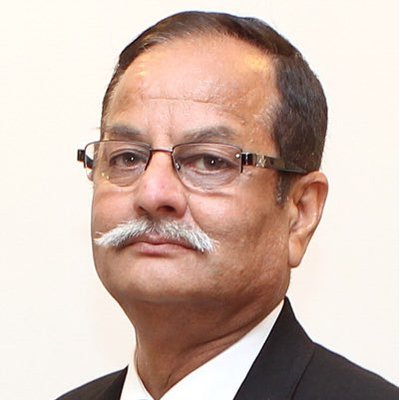
With over three decades of military and operational experience, his contributions at Ground Zero Defence Academy (GZDA) include mentoring NDA and defence aspirants, imparting real-world leadership and battlefield insights, instilling discipline, officer-like qualities, and personality grooming. He trains aspirants with a practical defence mindset, not just theory.
Ground Zero Defence Academy, Dehradun, positions itself as a serious, disciplined defence preparation institute guided by real armed forces leadership, focused on NDA written exam, personality, and discipline.
Conclusion
The Brigadier rank in the Indian Army epitomizes leadership, responsibility, and honour, demanding strategic vision and tactical expertise in safeguarding the nation. Aspirants can draw invaluable lessons from real military leadership at Ground Zero Defence Academy, Dehradun, where experienced mentors like Brigadier (Retd.) Govind Singh Sisodia guide the next generation toward excellence in service.
[metform form_id=”30″]