
Monthly Current Affairs & Key Questions for NDA & Competitive Exams – February 2026
For NDA written exam and SSB interview, a strong grip on monthly current affairs is as important as Maths and GAT practice. Regular revision of one full month helps you connect events in politics, defence, economy, science, and sports, which directly improves MCQ accuracy and boosts your confidence in personal interview and group discussions. This February 2026 roundup is designed like an NDA mentor’s notes so that you can quickly revise high‑value facts, build quality GK, and speak intelligently on national and international issues in SSB.
Key Monthly Current Affairs Highlights
Politics & Governance
Key Controversies and Judicial Interventions
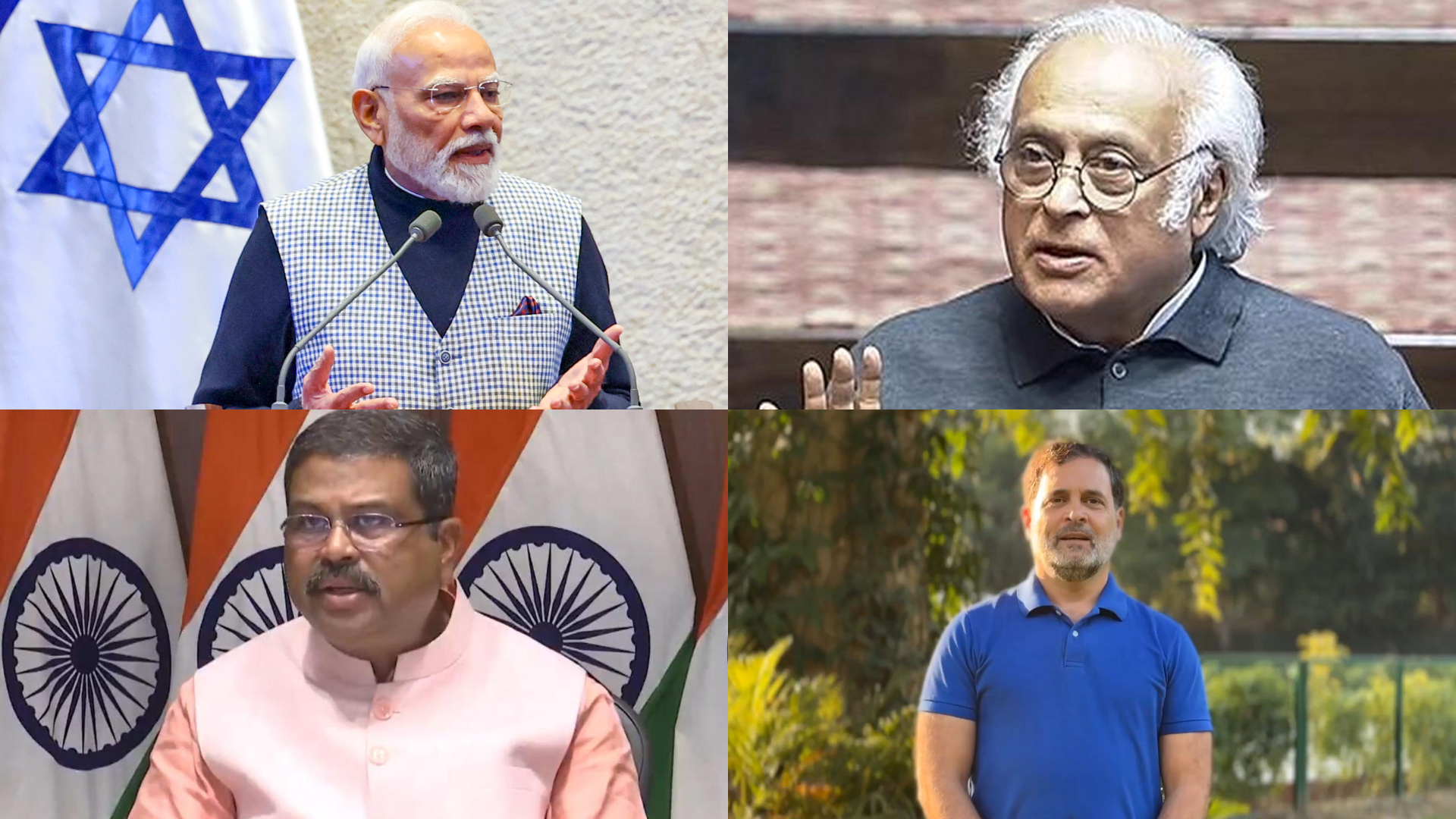
- On February 26, the Supreme Court imposed a blanket ban on an NCERT Class 8 textbook chapter titled ‘corruption’ in the judiciary, prompting Union Education Minister Dharmendra Pradhan to express regret and promise accountability. This sparked debates on educational content oversight and judicial integrity.
- Opposition MPs, led by Rahul Gandhi, protested on February 13 demanding the resignation of Union Petroleum Minister Hardeep Singh Puri over alleged links to Jeffrey Epstein files released by the US Department of Justice. Gandhi likened police action against Youth Congress protesters to “North Korea,” criticizing democratic freedoms.
- Congress slammed PM Modi’s address to the Israeli Parliament as diminishing India’s moral standing, contrasting it with Nehru’s historical stance on Israel.
Policy and Administrative Decisions
- The Union Cabinet approved renaming Kerala to ‘Keralam’ on February 26, marking a significant cultural-linguistic policy shift.
- The Ministry of Home Affairs released India’s first National Counter-terrorism Policy & Strategy ‘PRAHAAR’ to strengthen anti-terror frameworks.
- PM Modi inaugurated the Seva Teerth complex as the new Prime Minister’s Office and planned a Gujarat visit on February 28 to launch a semiconductor facility.
- Home Minister Amit Shah asserted on February 26 that BJP would win West Bengal polls and expel all “infiltrators.”
Geopolitics & International Relations Updates
Middle East and UN Engagements
- PM Modi reiterated India’s support for the Gaza Peace Plan during international engagements.
- At the 61st UN Human Rights Council (February 25), India sharply rebutted Pakistan’s allegations on Jammu & Kashmir, accusing it of propaganda and highlighting Pakistan’s economic woes vs. J&K’s development; India also criticized OIC for echoing Pakistan.
Neighbourhood and Regional Dynamics
- BNP claimed a landslide victory in Bangladesh elections on February 13 after 20 years, with Tarique Rahman poised to become PM, potentially impacting India-Bangladesh ties amid prior anti-India sentiments.
- India signed a protocol with France to amend the India-France DTAC (Double Taxation Avoidance Convention).
- Broader 2026 diplomatic challenges included Bangladesh backlash, Nepal’s political volatility with Gen-Z protests reviving nationalism, and calibrated Taliban engagement in Afghanistan to counter Pakistan.
Global Positioning
- India’s BRICS presidency (starting January 2026) tested multi-alignment amid US/EU trade talks, China tensions, and Global South advocacy.
- Foreign assistance geopolitics emphasized India’s role as a net security provider in the Indian Ocean via anti-piracy and HADR, with strategic autonomy on Russia-Ukraine and de-escalation with China (e.g., Kailash-Mansarovar Yatra resumption).
These events underscore NDA-relevant themes like judicial independence, federalism, counter-terrorism, and India’s assertive diplomacy.
Defence & International Relations
Defence Updates
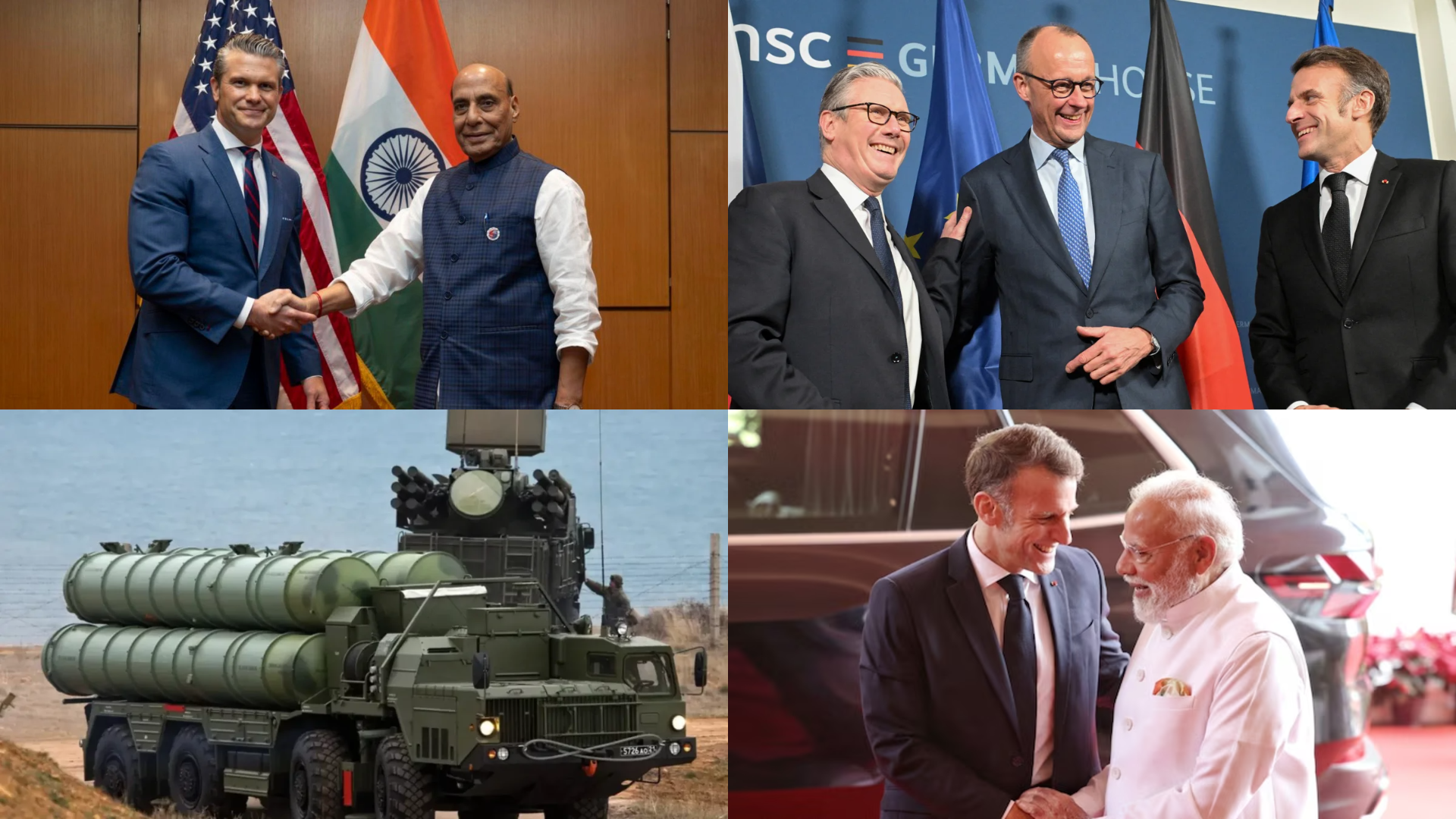
- India is moving to acquire five more S-400 Sudarshan air defence missile squadrons from Russia, strengthening its long-range air defence capability after the systems’ successful performance in recent operations. The Defence Ministry is expected to consider the Air Force’s proposal and deploy these units on both eastern and western fronts.
- During the Vayu Shakti-2026 air exercise, the Indian Air Force showcased advanced aerial defence platforms including the S-400 system, indigenous Akash missile system, and other combat aircraft, emphasising India’s integrated deterrence and combat readiness.
International Relations
- Israel and the United States conducted pre-emptive strikes on Iran, with explosions reported in Tehran and other Iranian cities as part of a coordinated military operation described by Israeli authorities as aimed at countering Tehran’s nuclear/missile threats. This prompted closures of airspace over Iran and parts of the region and triggered broader conflict concerns.
- The United Nations Security Council convened emergency discussions after the US-Israeli strikes, and UN Secretary-General Antonio Guterres condemned the attacks, urging a return to diplomacy and warning against further escalation and its humanitarian consequences.
- Russia strongly condemned the joint US-Israeli air strikes on Iran, labelling them a “pre-planned and unprovoked act of armed aggression” against a sovereign state, and called for an immediate halt to hostilities and diplomatic negotiations.
- China condemned the US-Israel strikes as violations of international law, calling the actions “brazen aggression” and urging respect for Iran’s sovereignty while pushing for dialogue to prevent further regional escalation.
- European leaders, including France, Germany and the United Kingdom, urged restraint and diplomatic talks, emphasising de-escalation and protections for civilian populations, and called for negotiations over Iran’s nuclear programme while condemning retaliatory attacks in the region.
- International airspace closures triggered by the conflict disrupted global aviation, affecting flights across Middle East routes and forcing airlines to cancel or reroute services amid safety concerns tied to the escalation of strikes and counterattacks.
India’s Strategic Diplomacy
- **Emmanuel Macron and Narendra Modi elevated India-France relations to a “Special Global Strategic Partnership” during Macron’s visit to India (February 17-19, 2026), expanding cooperation in defence, innovation, nuclear energy, space, and trade, and launching the India-France Year of Innovation 2026.
- India continues to advance its defence diplomacy through joint exercises with partners such as Japan and the United States, as well as maintaining balanced engagements amid broader geopolitical tensions (including Russia-Ukraine and China), reinforcing its role as a rising security contributor in the Indian Ocean region (reported as context across many analyses and official MEA releases). (This broader theme is widely noted in current affairs reporting, even though specific exercise names and dates weren’t recently all in one source.)
Economy & Environment
Economy News
India’s Latest Economic Updates – Q3 FY2026 & Early 2026 Indicators
- India’s GDP grew 7.8% in the October–December quarter (Q3 FY26) compared with the same period last year, surpassing market expectations and reflecting sustained economic momentum despite a global slowdown. This was reported under the revised GDP data series released by the government.
- The full-year GDP growth forecast for FY2026 has been revised upward to about 7.6% from earlier estimates, helped by robust performance in key sectors and improved data estimation methods.
- Manufacturing activity remains a strong driver of growth, with the sector expanding by double-digit rates in the third quarter, including a 13.3% surge in output—a sign of industrial resilience and production strength.
- India’s manufacturing PMI rose to 56.9 in February 2026, reaching a four-month high as strong domestic demand drove new orders and production expansion. A PMI above 50 indicates continued industrial expansion.
- Export growth slowed, with shipment orders increasing at the slowest pace in about 17 months amid ongoing global trade uncertainties, highlighting external sector challenges even as domestic demand strengthens.
- The services PMI remained strong (though exact February services PMI figures weren’t in today’s major headlines, strong services sector support was indicated in broader reports and economic surveys).
- India’s current account deficit widened in the October–December quarter due to a larger trade gap—partly reflecting tariff impacts and global pressures—underscoring ongoing external sector vulnerabilities.
- Economic data revisions (new GDP series) have improved the credibility and accuracy of growth estimates by better capturing modern economic structure (e.g., informal activity and digital economy), strengthening long-term data reliability.
Environment News
The State of India’s Environment 2026 report, released February 25 by CSE and Down to Earth, stated seven of nine planetary boundaries—such as land systems, freshwater, biogeochemical flows, novel entities, and ocean acidification—have been transgressed, threatening ecosystems, biodiversity, and health. It highlighted deforestation reducing forest cover, overuse stressing freshwater amid climate change, fertilizer excess causing eutrophication, plastics and chemicals entering ecosystems, and oceans 30-40% more acidic since industrialization. Recommendations include bolstering the National Green Tribunal, integrating boundaries into national accounting, technology-driven decarbonization, and landscape-scale governance with local communities as stakeholders.

Science & Technology
India’s science and technology sector in February 2026 highlighted budget-driven innovations, National Science Day celebrations, and strategic advancements in AI, semiconductors, and quantum
Budget Allocations for Department of Science & Tech.
The Union Budget 2026-27 allocated ₹28,049 crore to the Department of Science and Technology, including ₹20,000 crore for scientific research loans, boosting deep-tech like biopharma SHAKTI (₹10,000 crore for biologics) and India Semiconductor Mission 2.0 for full-stack chip design, equipment, and AI-linked RDI funds. Electronics components got ₹40,000 crore, while biotech funding rose to ₹3,446 crore, emphasizing pharma education institutes and industry-linked
Key Events
National Science Day on February 28 celebrated CV Raman’s legacy under the theme “Women in Science: Catalyzing Viksit Bharat,” with events at Vigyan Bhawan featuring panels on science-policy, Indian-language communication, and scientist interactions; Mumbai hosted student experiments and rocket demos. DBT launched bioinformatics center proposals under BIO-GRID, and DST released a quantum-safe ecosystem
Innovations
Budget introduced Bharat-VISTAAR, an AI tool for farmers via AgriStack offering multilingual crop, weather, and pest insights; “AI Kid of India” Raul John Aju addressed UN youth on tech adoption. IndiaAI Impact Summit promoted global AI collaboration, aligning with National Quantum Mission and Anusandhan
Sports
February 2026 featured intense cricket action for India in the T20 World Cup Super Eights, alongside domestic tournaments like Ranji Trophy semis and emerging hockey leagues.wikipedia+2
Cricket Highlights
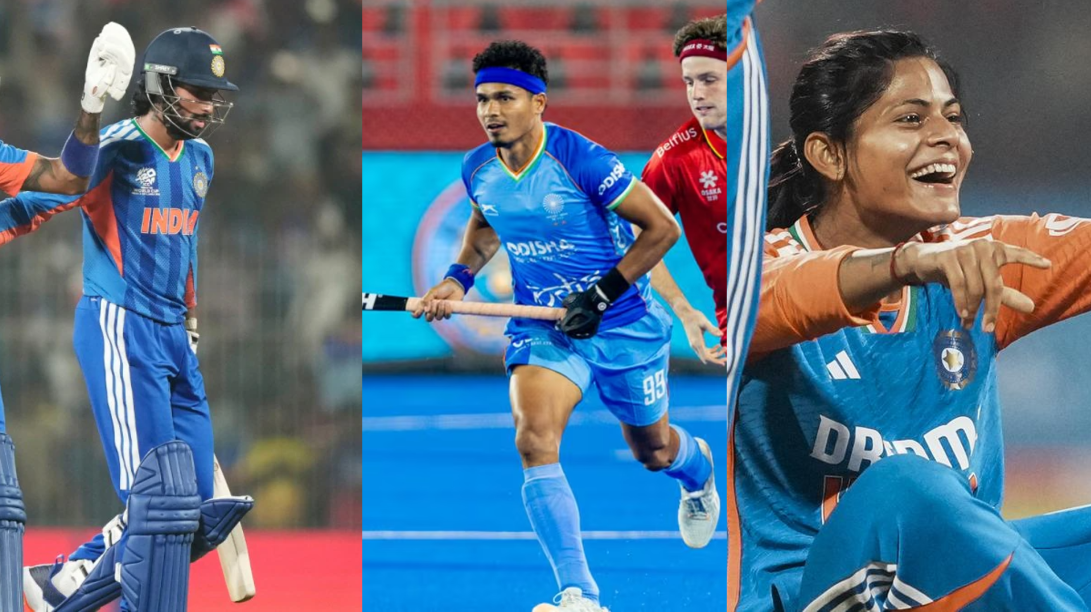
India posted dominant wins in Super Eights: beat Zimbabwe by 72 runs on February 26 in Chennai (257 all out vs 185; Abhishek Sharma 55, Hardik Pandya 50; Arshdeep Singh 3-24), then West Indies by 5 wickets on March 1 in Kolkata (chasing 196; Sanju Samson 97* off 50, record T20 WC chase score). Ranji Trophy semis ran February 15-19: Karnataka vs Uttarakhand, Bengal vs Jammu & Kashmir. Recent results included NZ’s historic 2-1 ODI series win in India, India’s 4-1 T20I series triumph, U-19 WC title (beat England by 100 runs), Vidarbha’s maiden Vijay Hazare Trophy, and RCB’s second WPL
Hockey and Football
India faced Belgium in Men’s Pro League on February 11; Harmanpreet was ruled out of squad for Australia games. Kalinga Lancers won Men’s Hockey India League over Ranchi Royals; SG Pipers took Women’s HIL via shootout vs Shrachi Bengal Tigers. Indian Super League: Mumbai City FC drew 1-1 with NorthEast United on March 1; Mumbai City vs Chennaiyin FC on February 19.
Other Sports
Women’s Asia Cup Rising Stars: India vs Nepal on February 17. India-Pakistan T20 WC match drew political focus over sporting rivalry. India advanced to T20 WC semis vs England in Mumbai.
Uttarakhand — State News
Infrastructure Developments
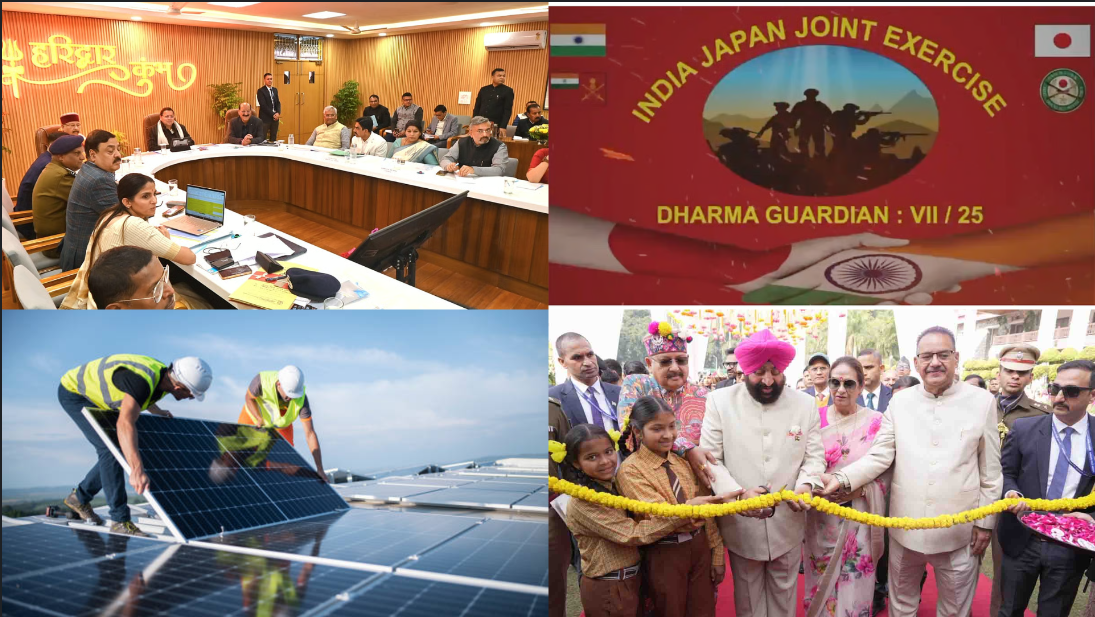
Dehradun advanced pod taxi projects with three corridors (Dehradun-Raipur, ISBT-Sahastradhara, Raipur-Clement Town) and Mussoorie-Nainital ropeway feasibility reviewed in a secretariat meeting chaired by Housing Secretary Dr. R. Rajesh Kumar. CM Pushkar Singh Dhami reviewed Kumbh Mela preparations, approving 27 proposals including ₹1.11 lakh crore budget, road, power, water, parking, and security works at Haridwar sites. Smart city development initiated for three hill municipal bodies in the first phase.
Energy and Environment
Uttarakhand surged 6.2 times in rooftop solar connections in one year, surpassing 26 states to enter top-10 nationally with 58,562 installations. Vulture populations declined, now limited to 17 states with 70% old nesting sites destroyed, per Indian Wildlife Institute study highlighting Madhya Pradesh and Rajasthan hotspots.
Defence and Security
7th Indo-Japan ‘Dharma Guardian 2026’ joint military exercise began at Chaubattia Military Station, focusing on tactical drills, weapons training, and counter-terrorism. CM Dhami updated on Ankit Bhandari case, warning against lapses in women’s safety and directing swift complaint resolutions. Leopard threats in Haldwani prompted villager demands for culling and admin
Cultural and Social Events
Governor Lt Gen Gurmit Singh (Retd) flagged off flower-decorated vehicles for Vasantotsav 2026 (Feb 27-Mar 1 at Lok Bhavan, Dehradun), featuring art galleries, photo exhibits, theatre like “Chakravyuh” by Kedargathi group, and buyer-seller meets for florists. CM Dhami transferred February 2026 pensions directly to beneficiaries and inaugurated Champawat Saras Corbett Festival for culture-tourism promotion. 153 Hindu refugees granted Indian citizenship under CAA.
Other Updates
State cabinet approved budget session in early March with logistics, housing, and security prep; illegal liquor crackdowns on Char Dham routes; AI strategies discussed for infra-education at TOI Uttarakhand Dialogue. Family ID scheme (Unique Family Identity) nodal under Planning Dept, targeting full rollout by March 2026.
Importance for NDA and Other Aspirants
Monthly current affairs revision turns scattered daily headlines into a coherent story, which is how questions are framed in NDA written exams. Instead of memorising isolated facts, you start to understand trends in defence modernisation, economic reforms, and foreign policy, improving your accuracy in GK and current affairs sections.
In SSB, assessors want candidates who can connect national events with broader security and socio‑economic implications. Citing examples like higher defence capital outlay, nuclear triad strengthening, or social schemes for Divyangjan shows maturity, awareness, and officer‑like qualities. Regular monthly revision also sharpens your ability to speak fluently in lecturette, group discussion, and personal interview, which directly increases your chances of recommendation.
Uttarakhand state news for February 2026 covers infrastructure, energy, environment, defence exercises, cultural events, and administrative updates, ideal for general awareness.
Repeated Past Important Questions Section
- Who presents the Union Budget of India in Parliament?
a) President of India
b) Prime Minister
c) Finance Minister
d) Speaker of Lok Sabha
Answer: c) Finance Minister - Which of the following best describes India’s nuclear doctrine?
a) First Use policy
b) Massive Retaliation with First Strike
c) No‑First‑Use with credible minimum deterrence
d) Nuclear Disarmament only
Answer: c) No‑First‑Use with credible minimum deterrence - INS Arihant‑class submarines are primarily associated with which leg of the nuclear triad?
a) Land‑based ballistic missiles
b) Air‑delivered gravity bombs
c) Sea‑based ballistic missiles
d) Cruise missiles only
Answer: c) Sea‑based ballistic missiles - The term “capital expenditure” in the Union Budget mainly refers to:
a) Government salaries and pensions
b) Interest payments on loans
c) Expenditure creating long‑term assets like roads and ports
d) Subsidies on food and fertiliser
Answer: c) Expenditure creating long‑term assets like roads and ports - Foreign investment made through stock markets in the form of portfolio flows is generally known as:
a) FDI
b) FPI/FII investment
c) ECB
d) SDR
Answer: b) FPI/FII investment - NIMHANS, often seen in current affairs, is an institution primarily related to:
a) Agricultural research
b) Space technology
c) Mental health and neurosciences
d) Renewable energy
Answer: c) Mental health and neurosciences - The ICC Men’s T20 World Cup 2026 Super 8 and knockout matches in February 2026 are being hosted by:
a) Australia
b) England
c) India
d) West Indies
Answer: c) India - SPYDER, Akash and MICA, often in defence news, are types of:
a) Main battle tanks
b) Air defence missile systems
c) Submarine‑launched torpedoes
d) Anti‑tank rifles
Answer: b) Air defence missile systems
5. Closing Words & Coaching Mention
For a future officer, current affairs is not just for clearing the NDA exam; it is the habit of staying updated and thinking about India’s challenges like a leader. Regular monthly revision of topics like Budget 2026–27, defence modernisation, social schemes, and major sports events will give you a solid edge over other aspirants in both written and SSB.
If you want structured guidance, test practice, and mentor‑driven analysis of such current affairs, Ground Zero Institute in Dehradun is widely recognised as one of the best NDA coaching institutes, with specialised focus on NDA written and SSB preparation. Combine disciplined study, daily newspaper reading, and monthly compilations like this with expert coaching, and you’ll be much closer to wearing the NDA uniform you are working for.