
UGC Updates 2026: New Rules Explained Simply
Hey students, if you’ve been scrolling through your feeds lately, you’ve probably seen UGC Updates 2026 blowing up everywhere. From heated debates on X to viral reels on Instagram, everyone’s talking about these new equity rules. But with so much noise—some saying they’re a game-changer for inclusion, others calling them unfair—it’s easy to get confused. Don’t worry, we’re here to break it down simply, based on official sources like UGC notifications and verified reports from The Economic Times and NDTV. We’ll stick to facts, explain legal terms in easy language, and focus on how this affects you as a student. By the end, you’ll have a clear picture without the drama.
If you’ve been seeing posts online about UGC Updates 2026, you’re not alone — the topic has sparked nationwide discussions and protests. The University Grants Commission recently notified new equity regulations to strengthen anti‑discrimination mechanisms in colleges and universities. The Supreme Court has temporarily stayed these rules, calling some provisions vague and capable of misuse, while many students — especially from general/unreserved categories — have expressed concern that certain provisions may be unclear or non‑inclusive. In this blog, we’ll explain the official facts from UGC notifications and verified reports, separate them from social media opinion, and help you understand what it really means for students.
What Are the UGC Updates 2026?
The full official name is the University Grants Commission (Promotion of Equity in Higher Education Institutions) Regulations, 2026. Notified on January 13, 2026, these rules replace the older 2012 guidelines and make anti-discrimination measures mandatory for all colleges and universities in India. Think of them as a stricter upgrade to ensure campuses are fair and safe for everyone.
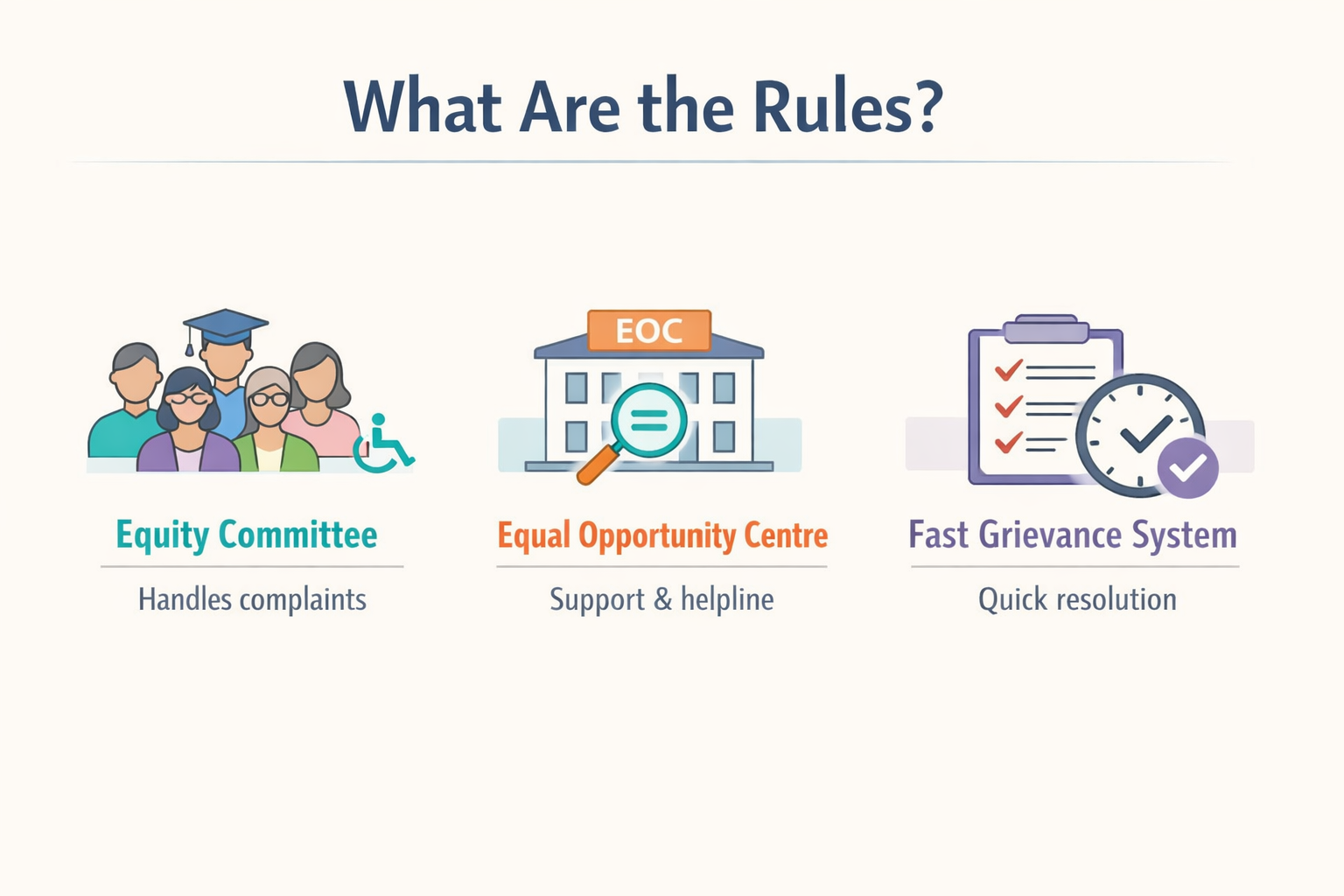
The main parts include:
- Mandatory Equity Committees: Every institution must set up a committee with members from Scheduled Castes (SC), Scheduled Tribes (ST), Other Backward Classes (OBC), persons with disabilities (PwD), and women. This group handles complaints and promotes inclusion.
- Equal Opportunity Centres (EOC): These are like dedicated hubs for dealing with discrimination issues, including helplines for quick reporting.
- Fast Grievance Systems: Complaints must be resolved within tight timelines—15 days for initial inquiry and up to 30 days for final decisions. If not followed, institutions face penalties like funding cuts.
According to reports from NDTV Profit, these UGC new rules explained aim to cover discrimination based on caste, religion, gender, disability, or place of birth. It’s not just about students; faculty and staff are included too.
Why the Government/UGC Introduced These UGC Updates 2026?
The UGC said these rules were needed because discrimination complaints on campuses have more than doubled in the last decade, as per their own data. Official justification points to Supreme Court orders in tragic cases like those of Rohith Vemula (January 17, 2016) and Dr. Payal Tadvi (May 22, 2019), where caste bias played a role. The 2012 rules were just advisory—matlab, suggestions without teeth—but these 2026 ones make compliance binding, aligning with the National Education Policy (NEP) 2020’s push for equity and inclusion.
The intent is to create safer campuses where no one faces harassment or exclusion. But here’s a common misunderstanding: Online chatter often paints it as “government targeting general category students.” Officially, as per NDTV, the purpose is anti-discrimination for all stakeholders, not favoring one group. Still, the wording focuses heavily on protecting SC/ST/OBC, which has sparked fears.
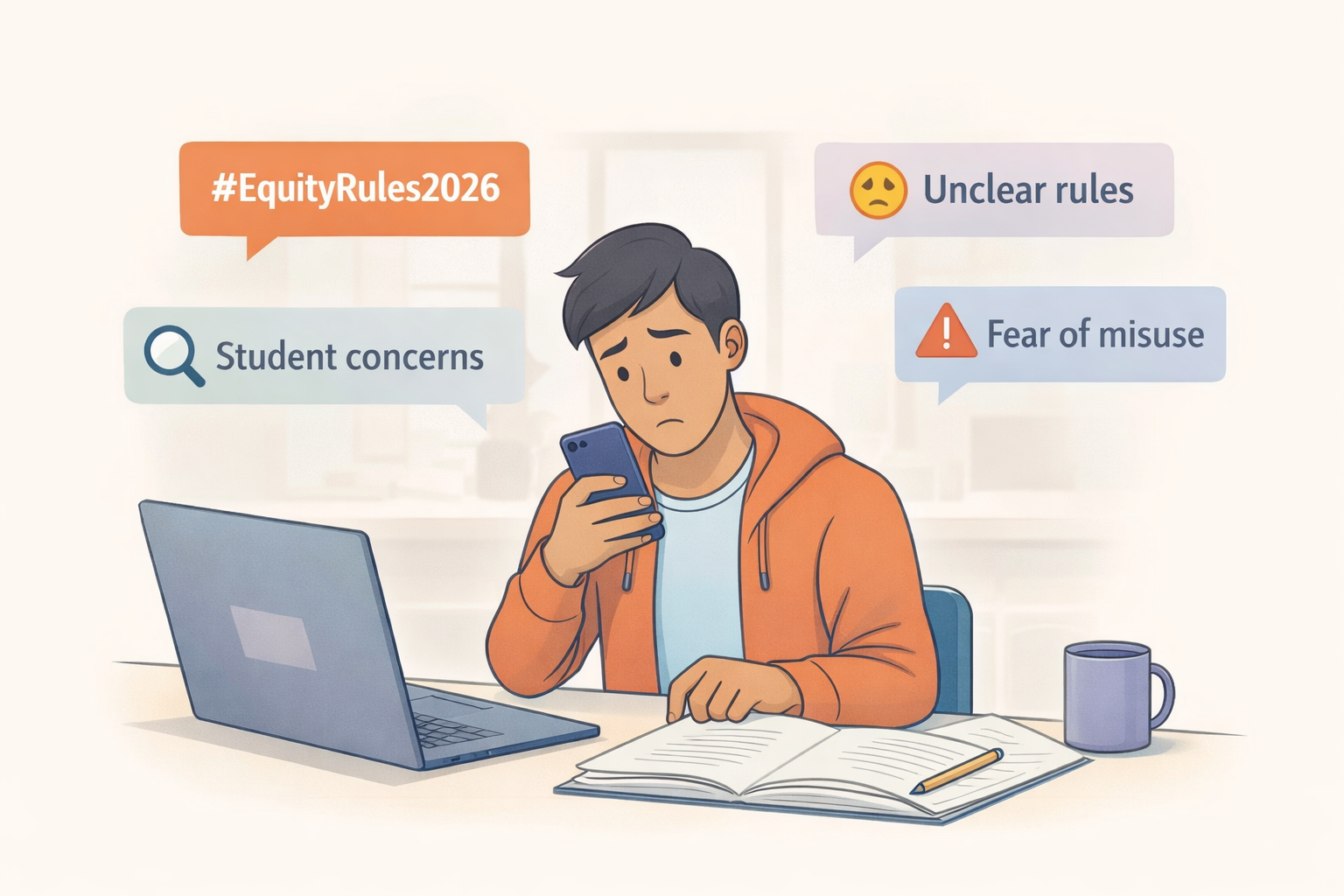
What Students Are Saying Online for UGC Updates 2026? (Social Media Reactions)
Social media is buzzing with mixed vibes on UGC equity regulations 2026. On X (formerly Twitter), many posts highlight fears among general category students that the rules create an “atmosphere of fear”—like hesitating to speak in class or interact with peers, worried about complaints. Trending hashtags like #ShameOnUGC show frustration over vague definitions and no explicit penalties for false claims. Some users call it “reverse discrimination,” saying it risks dividing campuses.
On Reddit, threads discuss a “chilling effect” on freedom—students worry about misuse turning colleges into “toxic cesspools.” But there’s support too: Posts welcome stronger protections against caste slurs or bias in admissions, with users noting an 118% rise in complaints from 2017-2024. Common themes include anxiety about fast timelines leading to rushed judgments and reputational damage.
Instagram reels echo this—viral videos show protests with captions like “one-sided rules” or “equality shouldn’t be selective.” Many worry the lack of safeguards for general category folks could lead to unfair targeting. On the flip side, some reels praise the rules for finally addressing long-standing biases, with comments like “about time for real inclusion.” Remember, these are summaries of trends from verified sources; we’re not quoting unverified rants.
Where and How Protests Are Happening
Protests kicked off right after the January 13 notification and spread like wildfire. In Delhi University’s North Campus, students staged sit-ins on January 20, raising slogans against “caste division” and demanding clarifications, as reported by The Times of India. JNU and University of Hyderabad saw rallies too, with mixed groups—some supporting, others opposing.
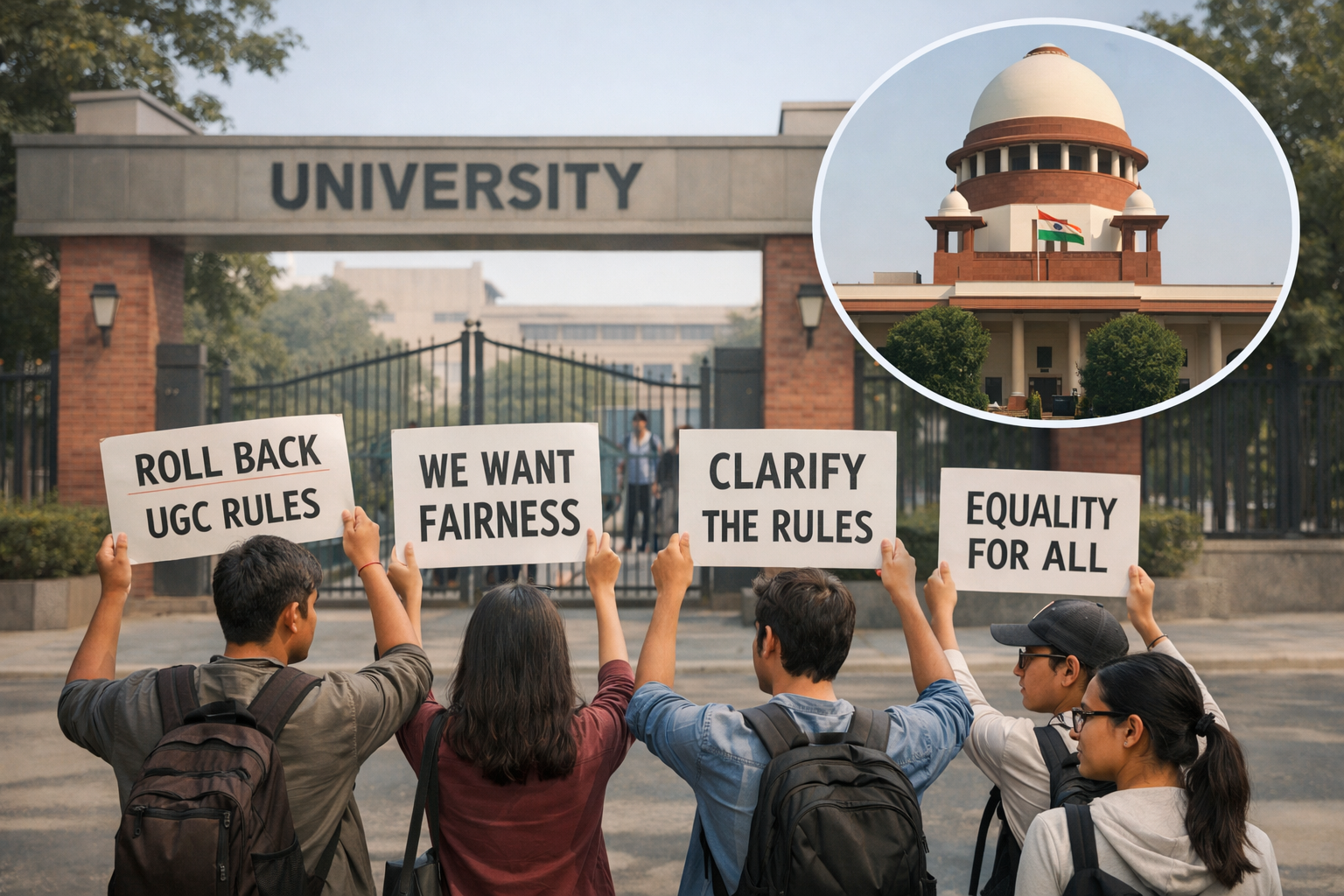
Nationwide, Uttar Pradesh led with demos in Lucknow (January 27 at Lucknow University gate), Varanasi (January 28), Deoria, Raebareli, and even Pilibhit. Rajasthan and Bihar joined in, with Bihar’s protests in Patna echoing calls for rollback. Smaller campus stirs happened in Mumbai and Chennai. Protestors, including BJP youth wings, demanded rollback or tweaks, fearing misuse. Some dramatic acts: A man in Kaushambi wrote a blood letter to PM Modi on January 28, and BJP functionaries resigned in protest. The New Indian Express noted these as “sustained demonstrations” against perceived bias.
Supreme Court Involvement — What It Means
On January 29, 2026, the Supreme Court stepped in big time. A bench led by Chief Justice Surya Kant stayed the rules, calling them “vague” and “capable of misuse.” As per Shiksha and The Economic Times, the court worried about “sweeping consequences” that could divide society—asking, “After 75 years, are we becoming regressive?” Petitions argued the rules were discriminatory by excluding general category from protections.
This stay is temporary, not a cancellation. The 2012 rules stay in effect till the next hearing on March 19, 2026. It means no new committees or systems for now—back to basics. The court wants experts to redraft for clarity, giving relief to protesters but leaving inclusion advocates waiting.
Common Misunderstandings vs Reality
Let’s clear the air with a simple list based on facts from The Economic Times and Republic World:
- Myth: Rules only cover SC/ST/OBC, ignoring general category. Reality: The rules define “aggrieved persons” as all students, but the focus on “caste-based discrimination” is limited to reserved groups. This needs clarity to avoid exclusion feels
- Myth: Rules allow easy fake cases with no penalties. Reality: Earlier drafts had penalties for false complaints, but the final version dropped them. Still, general laws like IPC for false accusations apply—it’s not a free pass.
- Myth: It’s all about politics, targeting one side. Reality: Officially, it’s about safety and equity for all, but vague wording (like “implicit discrimination”) raises real concerns about misuse and rushed probes without due process.
- Myth: Protests are just upper-caste whining. Reality: Many fear campus harmony breaking—general students avoiding interactions to stay safe. But data shows real discrimination spikes, so balance is key.
What This Means for Students (Practical Advice)
Abhi panic mat karo— the Supreme Court stay means the new rules are on hold, so old 2012 guidelines apply. Focus on your studies; UGC latest education rules won’t disrupt 2026-27 admissions yet.
Know your rights: Use existing complaint channels like anti-ragging helplines or university grievance cells. If facing bias, report officially—don’t rely on social media.
Stay updated from reliable sources like UGC website or NDTV, not rumors. When in doubt, talk to counselors or join student forums for guidance. Your career plans are safe; use this time to build skills and networks.
In conclusion, UGC Updates 2026 aimed for better inclusion but sparked fears due to unclear bits. The stay gives time for fixes, emphasizing knowledge over fear. Students, remember: Education is about growth, not division. Keep pushing for fair campuses—seek official clarifications and focus on your goals for 2026-27. You’ve got this!
Conclusion
UGC Updates 2026 have stirred debates, protests, and online discussions, but at the heart of it, the rules aim to create safer, more inclusive campuses for all students. While the Supreme Court stay gives clarity and time for improvements, it’s important to stay informed through official sources and not panic over online rumors. At Ground Zero Defence Academy (GZDA), we always encourage students to focus on knowledge, preparation, and growth, rather than fear. Understanding the rules, knowing your rights, and approaching campus life with awareness ensures you stay ahead academically and personally. Remember, education is about learning, opportunity, and fairness — not division. Stay alert, stay informed, and keep your goals on track!